



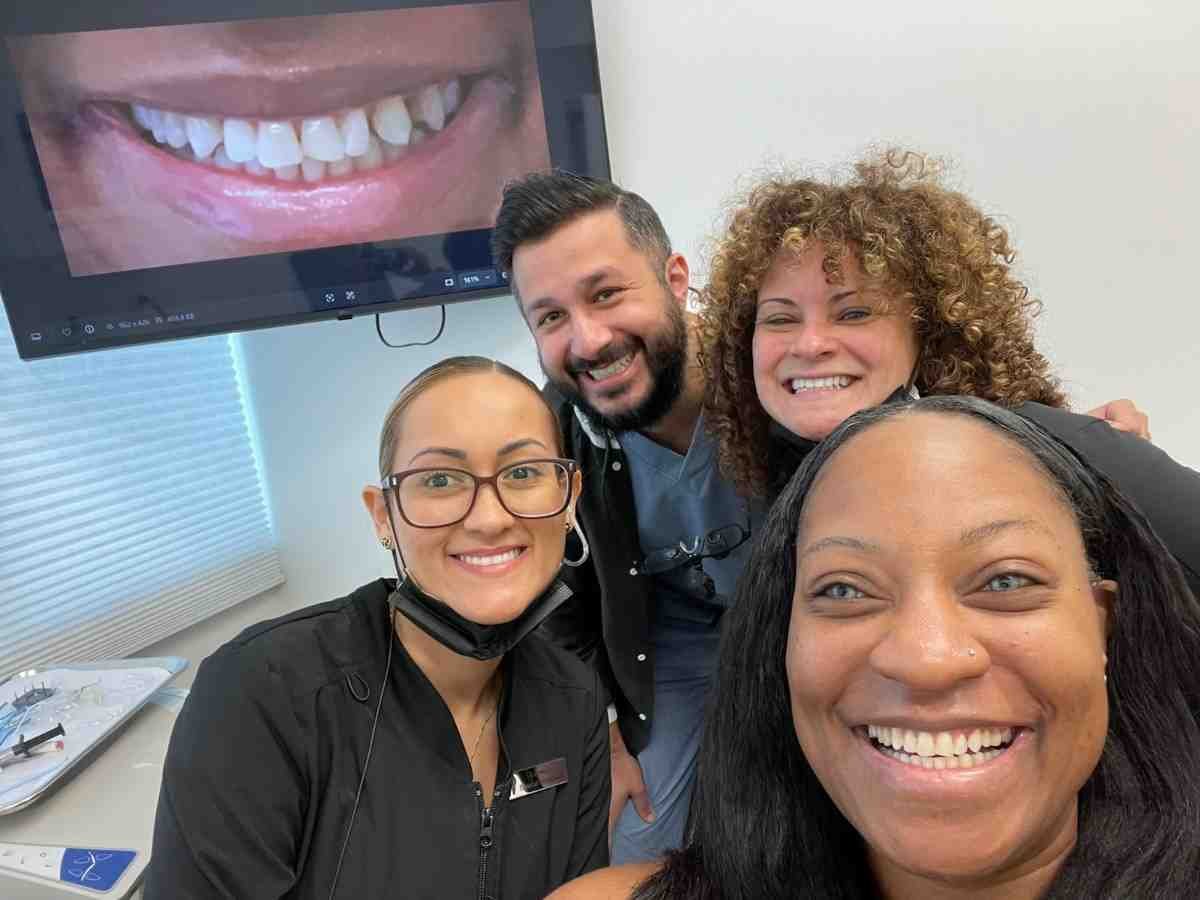
| Quick answer On-Camera professionals and content creators choose Invisalign because the clear aligners are nearly invisible on high-definition video, letting them straighten their teeth without visible metal brackets while keeping their on-camera image polished and professional. |
| 22 hours Recommended daily wear | Digital Treatment planning process | Metuchen, NJ Where to start locally |
| Key takeaways 1. Invisalign aligners are transparent and hard to notice on camera, which is why many on-camera professionals prefer them. 2. Clear aligners fit a demanding filming and presenting schedule with a smoother day-to-day experience than fixed brackets. 3. Consistent 22-hour daily wear is the single biggest driver of predictable results. 4. Not every case is suited to aligners, so a professional evaluation with Dr. Kapadia comes first. 5. House of Dentistry in Metuchen, NJ offers digitally planned Invisalign care tailored to busy professionals. |
The Short Answer: Why On-Camera Professionals and Creators Prefer Invisalign
Professionals and content creators prefer Invisalign because the aligners are clear, low-profile, and easy to work around a packed shooting calendar. When your face is your brand, a mouthful of metal brackets can pull focus away from your message. Clear aligners let you keep straightening your smile while staying camera-ready every single day.
The discreet appearance that keeps you camera-ready
Invisalign trays are made from a transparent material that sits closely against the teeth, so they are difficult to spot under studio lights or in high-definition video. For someone who films tutorials, hosts a stream, or steps in front of a live audience, that low visibility matters. You can keep creating without a visible reminder that treatment is underway, which is exactly why so many creators keep the decision to themselves.
How clear aligners fit a demanding on-camera schedule
Clear aligners suit a busy production schedule because they are worn steadily throughout the day and shaped for comfort. At House of Dentistry in Metuchen, NJ, Dr. Kapadia and Dr. Joseph plan each set of trays around your goals so treatment progresses in the background of your working life rather than interrupting it. The result is a routine that fits filming days, deadlines, and travel.
What Invisalign Actually Is (and How It Works)
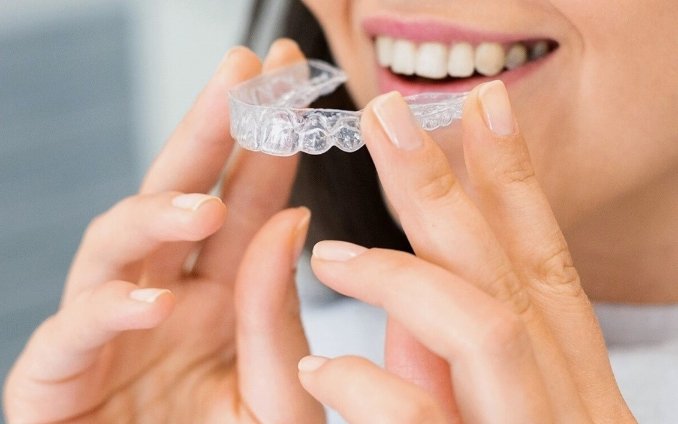
Invisalign is a system of custom-made clear aligners that gently guide your teeth toward a straighter position over time. Each tray is designed for your mouth using digital planning, so the movement follows a mapped-out sequence from start to finish.
Custom clear aligners vs. traditional metal braces
The main difference is visibility and design. Traditional braces use fixed metal brackets and wires bonded to the teeth, while Invisalign uses a series of smooth, transparent trays shaped to your bite. Both approaches move teeth, but aligners do it with far less visible hardware, which appeals to anyone who spends time on camera.
The digital treatment planning process
Your care begins with a digital scan of your teeth. From that scan, Dr. Kapadia builds a personalized plan that maps how each tooth should move. This lets you preview the direction of your smile before you begin, and it gives our team a clear roadmap to check your progress at each visit.
- Digital scan: We capture a detailed digital model of your teeth, avoiding messy impressions.
- Personalized plan: Dr. Kapadia designs a step-by-step movement plan tailored to your bite and goals.
- Custom aligners: Your clear trays are fabricated to fit closely and comfortably.
- Progress checks: We monitor your movement and fine-tune the plan as your smile shifts.
What the research says about aligner predictability
Research shows that several practical factors shape how predictably aligners move teeth, including consistent wear and careful planning. A systematic review looking at the factors influencing the predictability and success of Invisalign found that outcomes improve when treatment is well planned and patients follow the recommended routine, which underlines how much daily habits matter.
Why On-Camera Professionals Gravitate Toward Clear Aligners
On-camera professionals gravitate toward clear aligners because they reduce visual distraction, protect on-screen confidence, and generally feel smoother than fixed brackets. These three benefits line up almost perfectly with the demands of presenting and content creation.
Minimal visual distraction in high-definition video
High-definition cameras reveal fine detail, and metal brackets can catch light in ways that draw the eye. Clear aligners blend far more naturally with the teeth, so your audience stays focused on your words and expressions. For creators who rely on close-up shots, that difference is meaningful.
Confidence during presentations, streams, and shoots
Confidence often comes from not thinking about your appearance at all. Because the trays are discreet, many on-camera professionals report feeling more at ease during long shoots and live sessions. Dr. Kapadia and Dr. Joseph frequently hear from patients that they simply forget they are wearing them while they work.
A smoother experience compared with fixed brackets
Fixed brackets can rub against the inside of the lips and cheeks, which is not ideal when you are speaking for hours. The smooth surface of clear aligners tends to be gentler, making them a comfortable companion for people who talk all day professionally.
| Use these 1. Clear aligners for a low-profile look on camera 2. A digitally planned sequence you can preview 3. Smooth trays that are gentle on speech-heavy days 4. Professional monitoring at House of Dentistry | Avoid these 1. Do-it-yourself mail-order kits with no in-person oversight 2. Skipping professional evaluation before starting 3. Inconsistent wear that stalls your progress 4. Ignoring soreness or fit concerns between visits |
What the Evidence Shows About Invisalign Outcomes
The evidence shows that clear aligners move teeth effectively for many cases, that success depends heavily on planning and wear, and that finished results are often comparable to fixed appliances in suitable situations. Understanding this helps set realistic expectations.
Accuracy and efficiency of tooth movement
Studies looking at how accurately aligners move teeth report solid results for many types of movement, while noting that some movements are more challenging than others. A widely cited review of the accuracy and efficiency of dental movement with aligners, which combined data from multiple studies, offers a balanced look at where the system performs well, and it’s worth exploring for a fuller picture.
Factors that influence treatment success
Success is shaped by the complexity of your case, the quality of the plan, and how faithfully you wear your trays. This is why Dr. Kapadia spends time on planning up front and checks your progress along the way. A careful start reduces surprises later.
Comparing finished case quality with fixed appliances
When cases are well selected, finished quality with aligners can stand up well against traditional braces. A randomized controlled trial put this to the test directly, comparing patients treated with aligners against patients treated with traditional braces. The results were checked twice, once right after treatment finished and again several months later. At both points, the aligner patients’ outcomes matched up closely with the braces patients’ outcomes, and there was no real difference in overall quality between the two groups. The one place they did differ was in how long treatment took, with braces patients finishing a bit sooner on average. Even so, the finished results stayed just as strong for aligner patients, holding steady well after treatment wrapped up.
| A note from Dr. Kapadia “The patients who see the smoothest results are the ones who wear their aligners consistently and keep their check-in visits. Straightening a smile is a partnership, and I want every creator who comes to the House of Dentistry to feel supported at each step.” |
The Role of Consistent Wear and Follow-Through
Consistent wear is the most important thing you control. Aligners work only when they are on your teeth, and the recommended target is around 22 hours of wear each day. Follow-through on that habit drives predictable movement.
How compliance drives predictable results
The more closely you follow the 22-hour guideline, the more your teeth move as planned. Gaps in wear can slow progress and put your timeline at risk. Building a simple daily rhythm around your trays keeps everything moving in the right direction.
The importance of professionally guided planning
A carefully guided plan keeps your progress aligned with the digital roadmap. At House of Dentistry, Dr. Kapadia reviews your movement at each visit and adjusts as needed, so your treatment stays responsive to how your smile actually changes.
Getting Started With Invisalign in Metuchen, NJ
Getting started is simple: book a consultation, get a digital scan, and review a personalized plan with Dr. Kapadia. From there, you will know whether aligners are the right path for you.
What happens at your first consultation
At your first visit, we examine your teeth, capture a digital scan, and discuss your goals. Dr. Kapadia will explain what your smile could look like and outline the steps involved. You leave with clear information rather than pressure.
Questions to ask before you begin
- Am I a strong candidate for clear aligners?
- What does my personalized plan look like?
- How will progress be monitored at the House of Dentistry?
- What should I do if I have a question between visits?
To take the first step, call House of Dentistry in Metuchen, NJ, at 732-510-0990 and ask about an Invisalign consultation with Dr. Kapadia.
Meet Dr. Kapadia
A Metuchen native, Dr. Anuj Kapadia is passionate about combining exceptional dentistry with an unparalleled patient experience. He believes service is a lost art in dentistry and leads the House of Dentistry team with a commitment to going above and beyond for every patient.
Dr. Kapadia is an Invisalign® Blue Diamond Provider and the only general dentist in Central New Jersey to hold this distinction. With more than 1,000 hours of advanced Invisalign education, he helps transform hundreds of smiles each year through Invisalign and cosmetic smile makeovers. His expertise has earned recognition beyond the practice, including features in The National Enquirer and The Patch. He also serves as an attending dentist at JFK Medical Center, where he contributes to the education and development of the next generation of dentists.
Outside the office, Dr. Kapadia loves traveling with his family, great wine, cheering on the Knicks, and constantly picking up new hobbies. His latest is Brazilian Jiu-Jitsu, where he’s enjoying the process of being a beginner all over again.
Meet Dr. Joseph
Dr. Joseph specializes in combining artistry and compassion in his approach to dentistry. With an advanced understanding of shade and ceramics, he creates natural-looking, customized smiles that enhance each patient’s confidence. Known for his warm and attentive care, he takes time to listen, ease concerns, and ensure patients feel comfortable every step of the way. For Dr. Joseph, dentistry is about more than teeth- it’s about helping people smile with confidence.
Graduating in the top 10 of his class at Rutgers School of Dental Medicine, Dr. Joseph was inducted into the prestigious Omicron Kappa Upsilon Honor Dental Society- an honor reserved for the highest-achieving dental professionals. He then went on to complete his residency training at Newark Beth Israel Medical Center, where he was mentored by over 60 specialists and completed hundreds of hours of advanced continuing education. Outside the office, Dr. Joseph brings the same creativity and energy to life– he’s an avid painter, a passionate traveler, and stays active, making him just as fun and interesting beyond dentistry as he is dedicated within it.
Frequently asked questions
| Q: Why do dentists not recommend Invisalign? Dentists may not recommend Invisalign when a case is too complex for clear aligners to address well, since some bite issues respond better to other approaches. That is why an in-person evaluation with Dr. Kapadia is important, so you get an honest assessment of whether aligners suit your smile. |
| Q: What is the biggest complaint with Invisalign? A common complaint is mild, temporary soreness or a brief adjustment to speech as the mouth adapts to new trays. These effects usually ease quickly. Consistent wear and professional monitoring at House of Dentistry help keep the experience smooth and on track. |
| Q: Why is there a lawsuit against Invisalign? Legal matters involving large dental brands typically relate to business and market disputes rather than the day-to-day safety of clear aligner treatment for patients. What matters most for your care is choosing professionally supervised treatment, which is what you receive with Dr. Kapadia and Dr. Joseph at House of Dentistry in Metuchen, NJ. |
| Q: Is Invisalign a good option for people who appear on camera? Yes, Invisalign is often a strong option for people who appear on camera because the aligners are transparent and hard to notice under studio lights or in high-definition video. This lets on-camera professionals and content creators straighten their smile while staying camera-ready throughout treatment. |
Remember: Clear aligners reward consistency, so wear them for around 22 hours a day and keep your check-in visits. A personal evaluation with Dr. Kapadia is the best way to know if Invisalign fits your smile.
Disclaimer: This article is for general information only and is not a substitute for professional dental advice. Please consult Dr. Kapadia and Dr. Joseph at House of Dentistry for guidance specific to your needs.
New patients and emergency appointments welcome
732-510-0990
Schedule Now